
Surrey winters are mild but wet, and it's the mix — standing water, wet leaves, frost, road salt — that quietly does more to a drive than most people notice. A few habits see it through to spring in good shape.
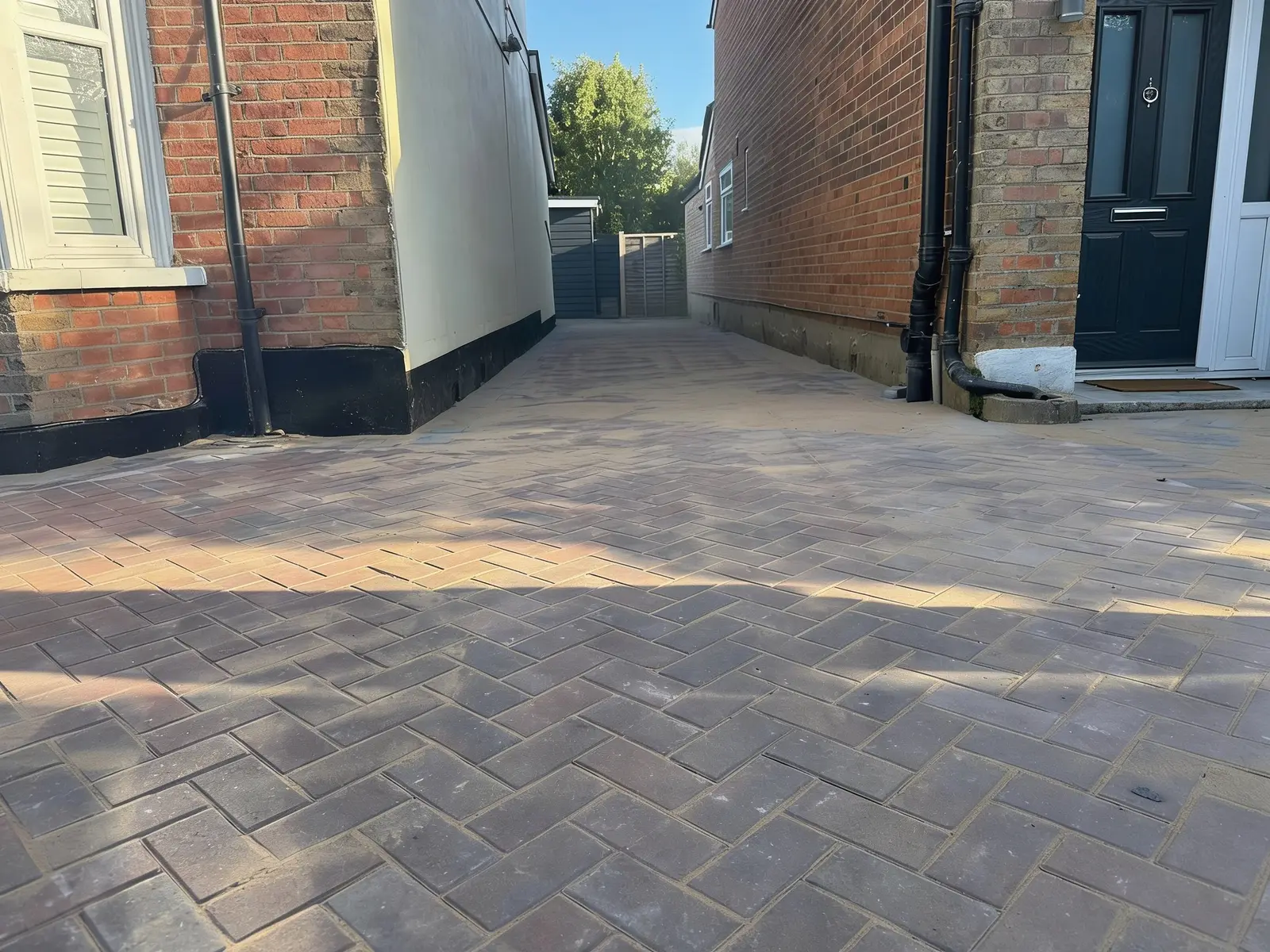
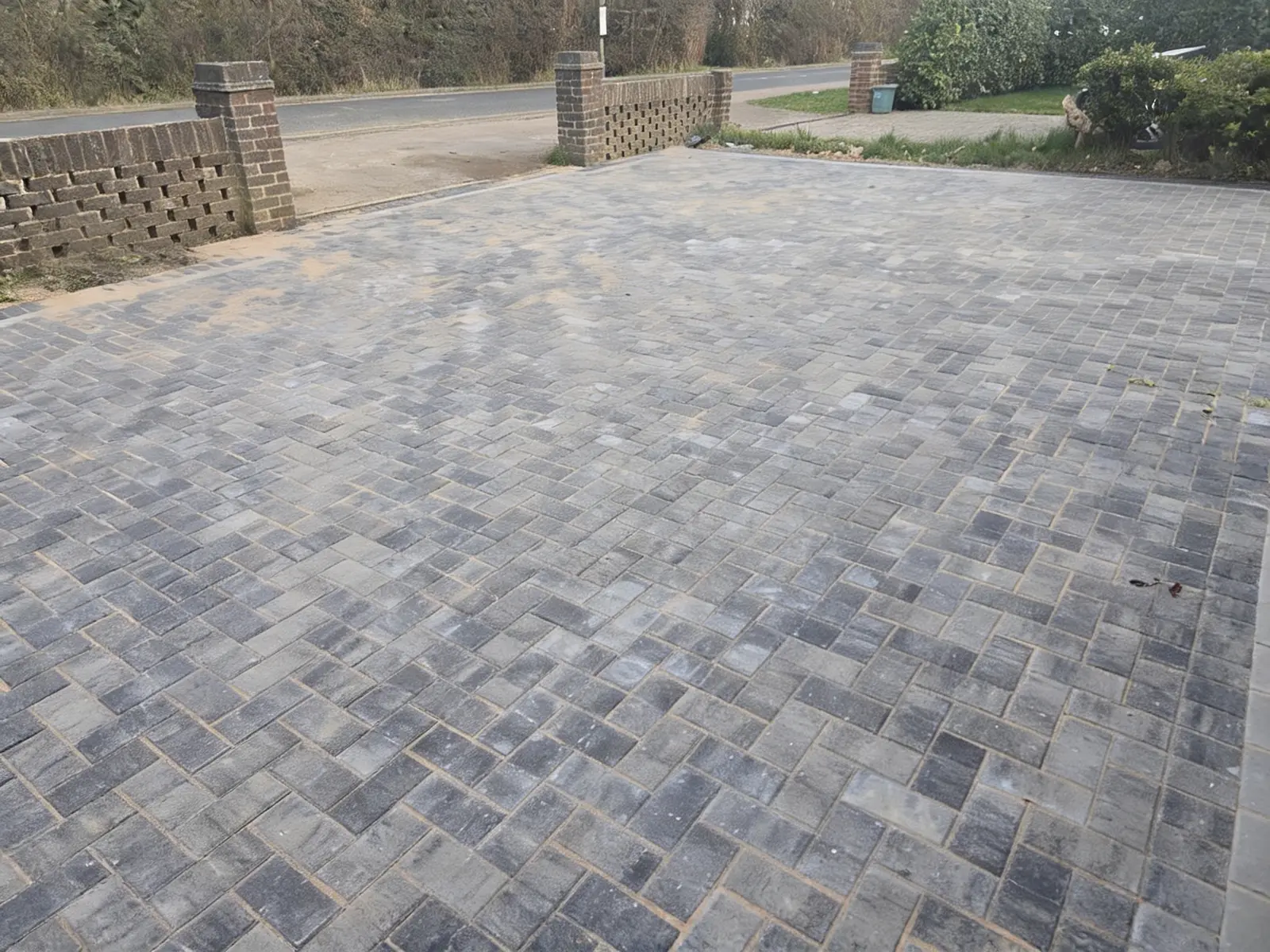
On block paving the enemy is muck in the joints. Wet leaves hold damp against the kiln-dried sand and it starts washing out the first time it rains hard. Sweep through autumn and early winter and you save yourself a re-jointing job later on.
On resin it's the de-icer. Rock salt and the harsher ice-melts can stain or pit the surface over time. A calcium-magnesium-acetate (CMA) de-icer is kinder to it and works at lower temperatures than rock salt does anyway.
On anything, keep an eye on standing water. If a puddle sits in the same spot more than a day after the rain stops, the falls are off or the drainage isn't keeping up. Worth sorting — water that sits gets into the base over winter and lifts the surface come spring.
One last thing: don't jet-wash in a frost. Even on a bright morning the wash water freezes back into the joints and lifts them. Leave it for a mild, dry day.