

Residential service
Gravel Driveways
The right fit for period and rural properties. Built on a proper base with set edges and the correct depth, so the stone stays put instead of scattering across the lawn.
About Gravel Driveways
Gravel suits some houses better than anything else — period cottages, farmhouses, long rural approaches — where a smooth black or patterned drive would look wrong. It's the most affordable surface to lay, drains freely by nature, and there's a satisfying practicality to it: the crunch underfoot is a burglar alarm nobody has to switch on.
The reason gravel gets a bad name is that most of it is laid badly — a load of stone tipped straight onto soil, with no base and no edges. That version scatters across the lawn, rutts into tramlines where the wheels run, and grows weeds through the middle within a season. A gravel drive done properly is a built structure with loose stone on top, not a pile of chippings.
We build the base, set the edges to hold the stone in, and lay the right depth of the right grade — often over a stabilising grid on the areas that see the most turning and braking, so the surface stays put and level instead of migrating to the low spots.
Best for
- Period, rural and countryside properties where a smooth finish would look out of place
- Long or wide approaches where cost per square metre matters
- Owners who value the low cost, free drainage and the security of the crunch
What’s included
- A site visit to talk through stone type, colour and grade
- Excavation and a compacted Type 1 sub-base
- A geotextile membrane to keep weeds down and stone out of the mud
- Edge restraints to contain the gravel along every boundary
- A stabilising grid on high-traffic or sloped areas where needed
- The right depth of the right grade of decorative aggregate
- The site left graded, even and clean
How the job runs
- Site visitWe look at the ground, the slope and how you'll use the drive, and talk through stone options — colour, grade and whether a stabilising grid earns its place on your site.
- Excavate and baseWe dig out and lay a compacted Type 1 sub-base with a membrane over it, so the stone has something solid beneath it and can't work down into the soil.
- Edges and gridEdge restraints are set along every boundary to contain the gravel, and a stabilising grid is laid on the areas that see the most turning and braking.
- Lay the stoneThe decorative aggregate is spread to the correct depth and graded level. Too deep and it drags underfoot; too shallow and the base shows through — we lay it right.
Materials & spec
What we build with
- Sub-base — Compacted Type 1 MOT — the built foundation that stops gravel rutting into tramlines
- Membrane — Geotextile layer to suppress weeds and keep the decorative stone out of the ground beneath
- Stabilising grid — Cellular grid on turning, braking or sloped areas, to hold the gravel level where it wants to migrate
- Decorative aggregate — Angular gravel in your chosen colour and grade — angular locks together where rounded pea shingle rolls
- Edge restraint — Timber, block or steel edging set to contain the stone along boundaries and paths
Things worth knowing
Angular gravel, and why grid earns its keep
Two choices make or break a gravel drive. First, the stone: angular gravel locks together and stays put, where rounded pea shingle rolls underfoot and migrates. We steer people towards an angular grade for anything cars drive on. Second, on sloped or heavily used drives, a stabilising grid holds the stone in its cells so it can't wash down to the bottom or pile up where you brake.
The extra cost of the grid is modest against the cost of raking and topping up gravel every year, and on a slope it's the difference between a drive that holds and one that ends up in the gutter after the first heavy winter.
Where we do this
Gravel Driveways across Surrey
We cover the whole county — these are the towns we’re asked for gravel driveways most often.
FAQ
Gravel — common questions
Won't the gravel go everywhere?
Not if it's built properly. Loose stone spreads when it's tipped onto soil with no edges and no base. With edge restraints holding it in, the right depth of angular stone, and a stabilising grid on the areas that see turning and braking, a gravel drive stays where it's laid with only the occasional rake.
Is gravel a problem for wheelchairs or prams?
Loose deep gravel can be. Where accessibility matters we lay a stabilised gravel over a grid, which firms the surface up considerably while keeping the gravel look, or we suggest a resin bound finish for the paths and approaches that need to be smooth.
How often will it need topping up?
A well-built gravel drive with edges and a grid needs very little — a light top-up every few years to keep the depth even. It's the badly built ones, with no containment, that need barrowing back into shape every spring.
Can you lay gravel on a slope?
Yes, but a stabilising grid becomes essential rather than optional — without it the stone washes to the bottom of any real gradient. With a grid holding it in place and drainage set correctly, gravel works fine on a sloped approach.
Which stone should I choose?
For anything cars use, angular gravel in a 10–20mm grade is the sweet spot — big enough not to track in shoes, small enough to sit comfortably. Colour is down to the house; we'll bring options to hold against your brick or stone at the site visit.
More from us
Other services
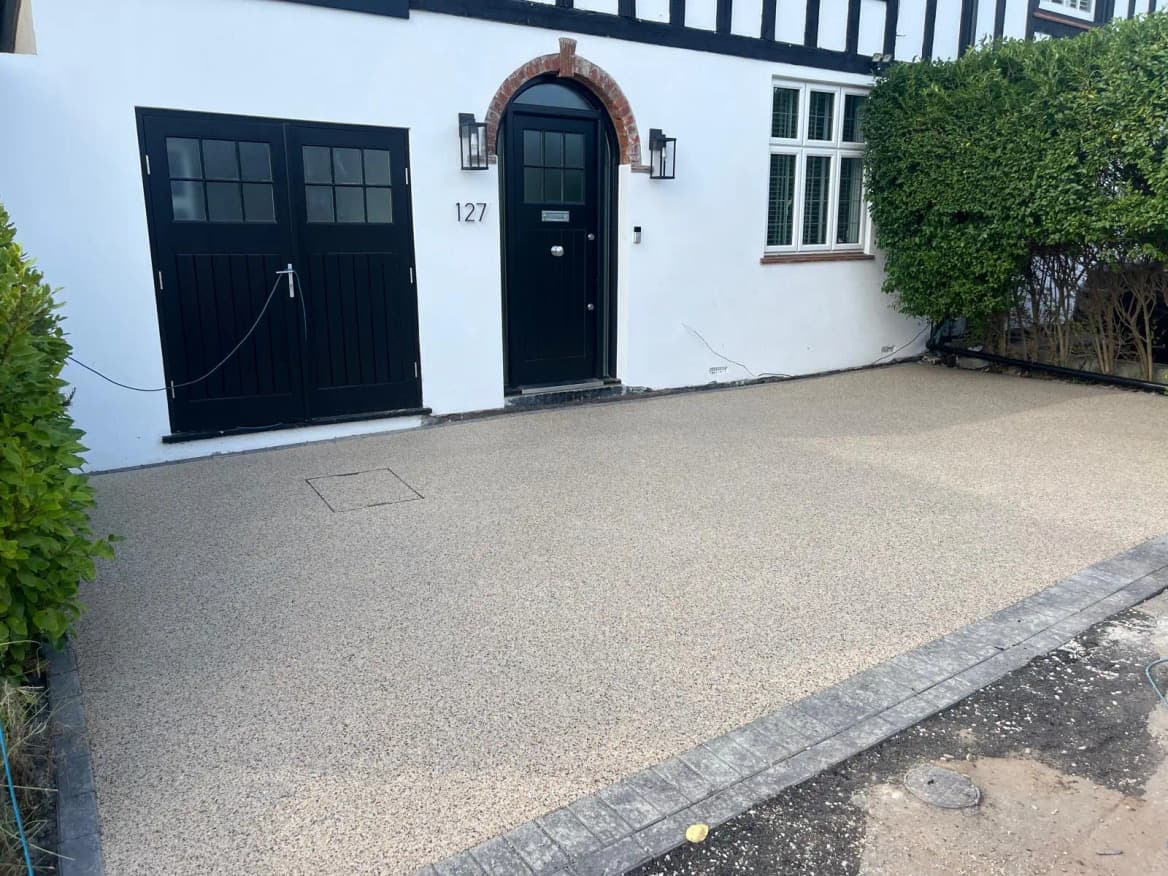
Resin Bound Driveways
Seamless, permeable and sharp-looking for years. Mixed on site and trowelled by hand — and only ever laid on a base that's genuinely up to the job.
Get a resin quote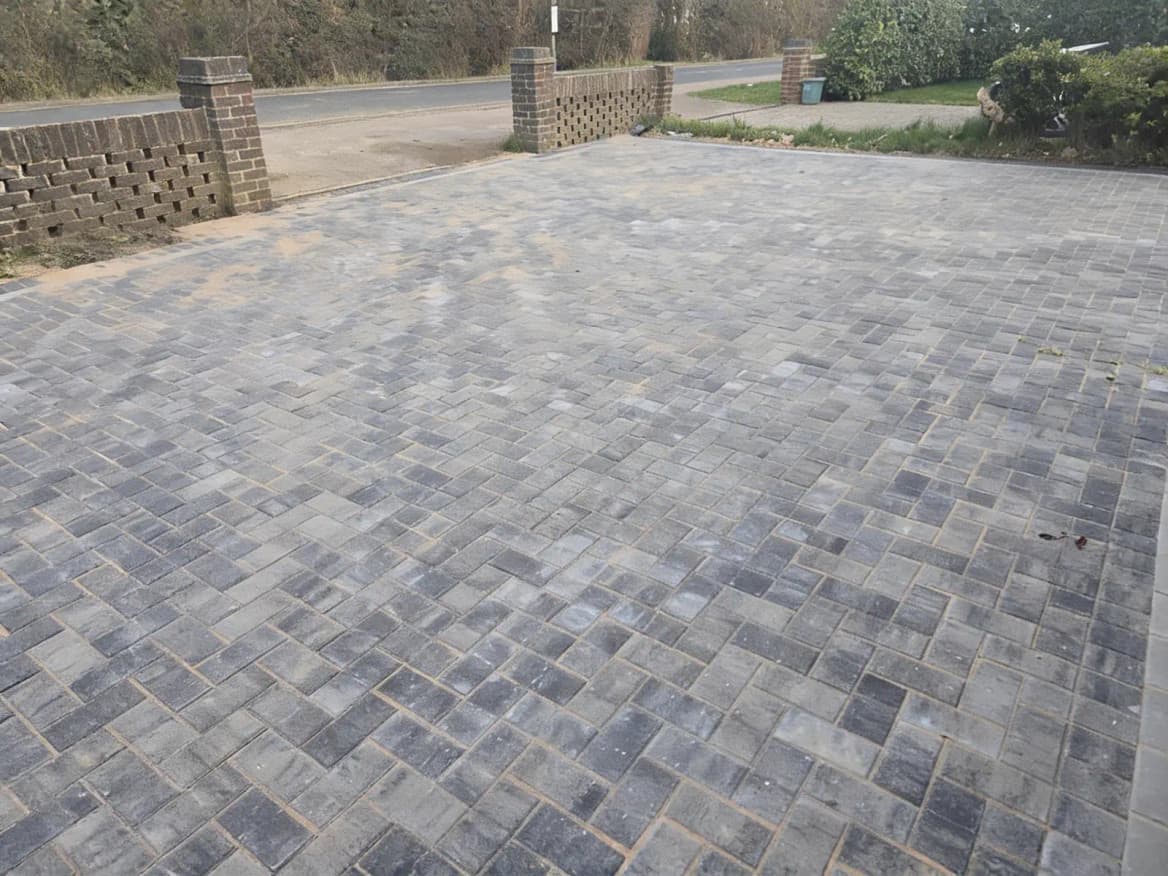
Block Paving Driveways
A smart, interlocking driveway that lifts the front of the house — laid to BS 7533 on a proper base, so it holds its shape instead of dipping and sprouting weeds.
Get a block paving quote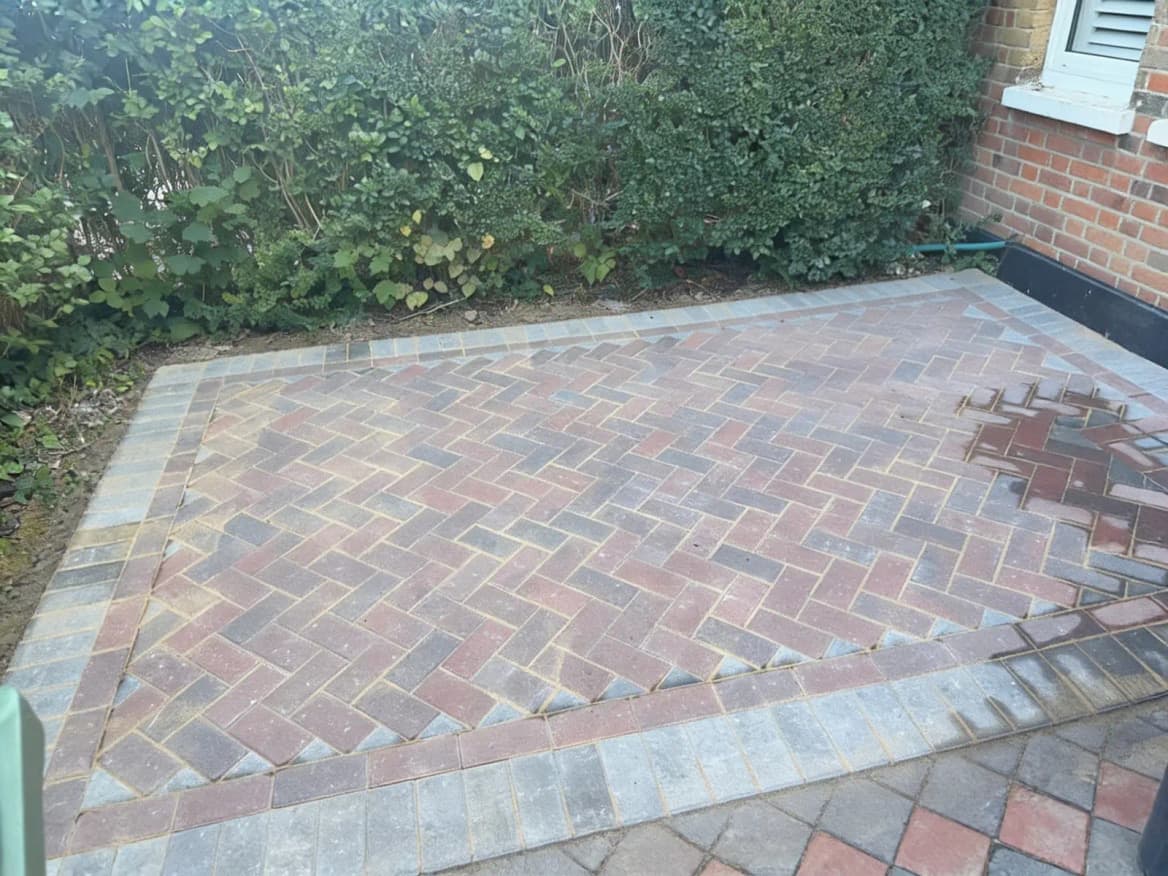
Patios & Pathways
Porcelain, sandstone or block, laid with the right falls and jointed properly — so water runs off the way it should and the edges don't lift a season later.
Get a patio quote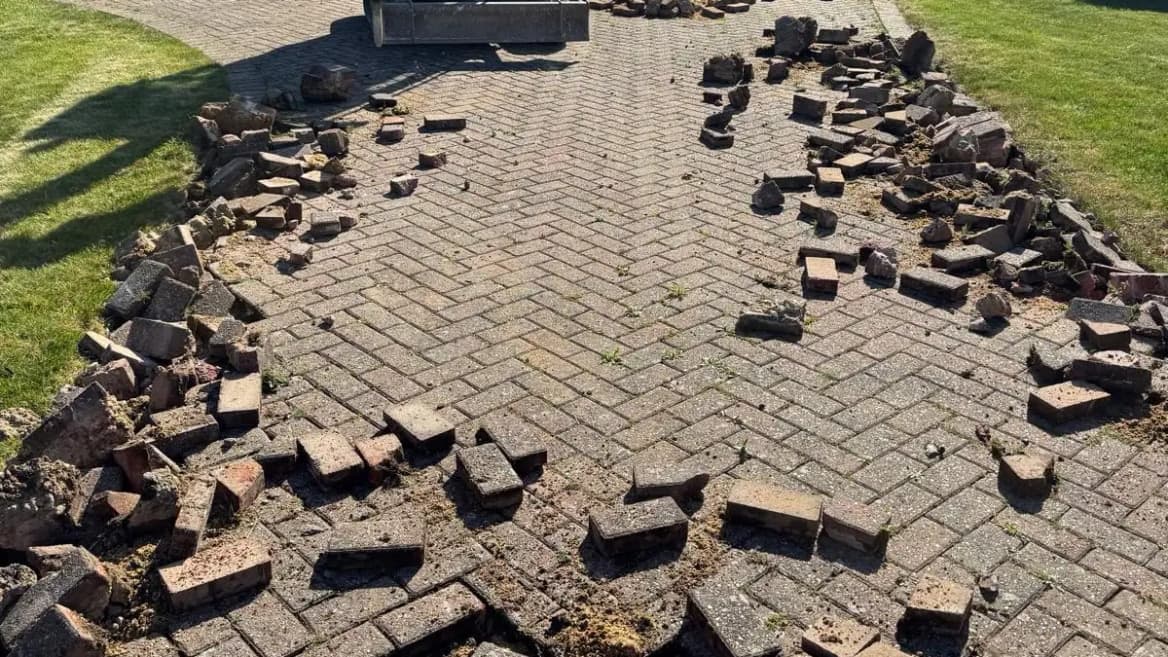
Driveway Repairs
Dipping, cracked or growing weeds? A drive that's tired in places can usually be put right — patched, re-jointed or re-laid in sections — without ripping the whole thing up.
Book a repair
Need a price for a driveway or surfacing project?
Free, no-obligation quotes. No project too small or too big.