
Tarmac is the cheapest hard-wearing drive you can have, and that's exactly why it's the easiest to cut corners on. The playbook barely changes from job to job: thin surface, skimp the base, no edging, light compaction. Done that way it looks grand for six months and starts going inside two years. Here's what to actually check.
Depth first. A proper drive has at least 60mm of binder course and 25–30mm of surface course over it — call it 85–90mm of asphalt. A quote that just says “two-coat tarmac” with no numbers is one you can't compare to anything. We put the depth in writing in millimetres, because it's the single biggest lever on both cost and how long it lasts.
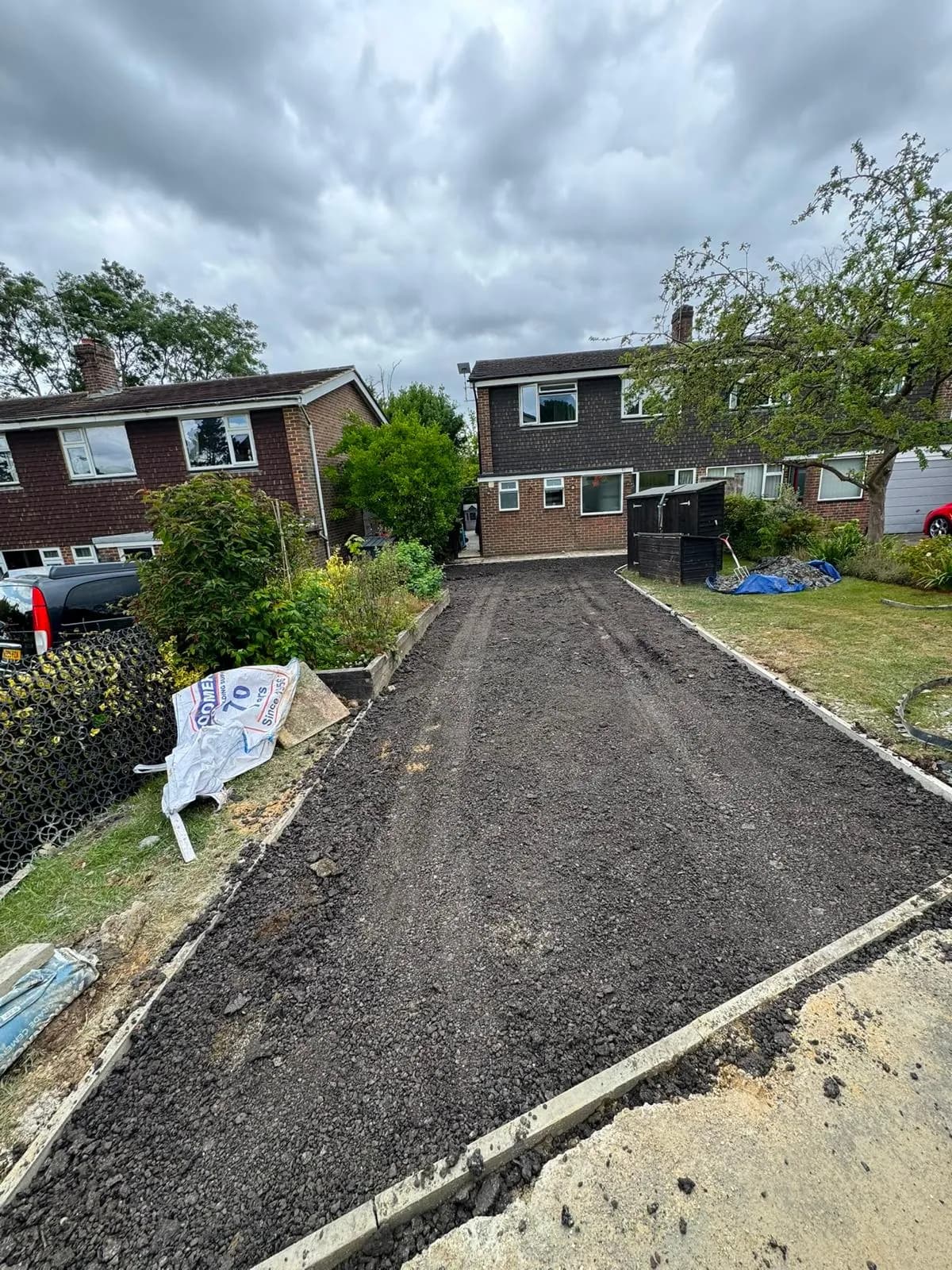
Then what's under it. The answer you want is 150–250mm of compacted Type 1 sub-base — more if the ground's soft. “We'll lay on the existing” is sometimes genuinely fine on a sound base, but it's also the line most often used to skip the priciest part of the job. Ask either way.
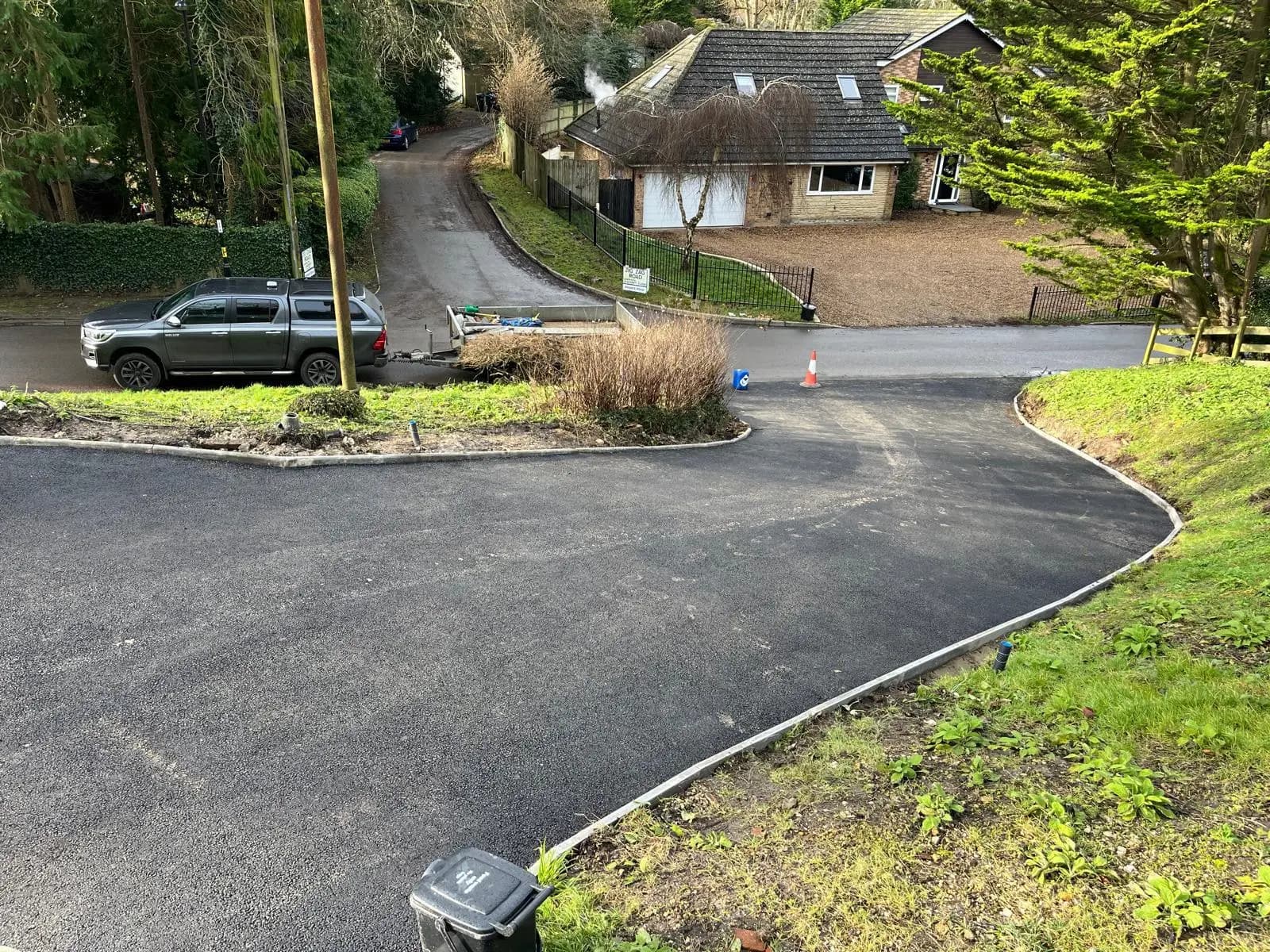
Edges next. Tarmac with nothing holding its edge fails there first — it cracks and crumbles outward where there's no restraint. Proper edging is a haunched concrete bed under a block border, a kerb or a steel edge. Cheap quotes leave it out.
And compaction. Hot tarmac that isn't rolled hard while it's still hot stays soft — you'll get tyre marks in the first proper summer, then it starts ravelling. Ask whether they roll it or just run a wacker plate over it. The answer you want is roller. If a quote comes in well under the others, one of these four is where it's been saved — and the way it eventually fails tells you which.