

Residential service
Block Paving Driveways
A smart, interlocking driveway that lifts the front of the house — laid to BS 7533 on a proper base, so it holds its shape instead of dipping and sprouting weeds.
About Block Paving Driveways
Block paving is the drive most people have in mind when they picture something smart out front — a clean, interlocking surface in herringbone or stretcher bond, edged crisply against the lawn, that lifts the whole face of the house. Its strength is in the interlock: thousands of individual blocks bracing against each other, so there's no single slab to crack the first time something heavy parks on it.
What decides whether it's still sitting flat in ten years, though, is everything you can't see. The blocks are the straightforward bit. The sub-base, the laying course, the edge restraints and the falls are what keep it from dipping, rutting and pushing up weeds after a couple of winters. We build to BS 7533, the paving standard, because that's the line between a driveway and a patio that happens to have a car on it.
We lay the Marshalls and Bradstone ranges, so you can go traditional with a Tegula sett on a period property or clean and linear on a modern frontage. We'll bring samples to the site visit to hold against your brick and render, so you're choosing against the real thing rather than a brochure.
Best for
- Period and traditional homes, where a seamless modern finish would look out of place
- Drives that take the odd point load — caravans, skips, removal lorries, trailer jacks
- Anyone who wants a surface that can be lifted and re-laid a section at a time rather than replaced whole
What’s included
- A site visit with block samples held against the house before you decide
- Excavation to the right depth, with a membrane over soft ground
- A compacted Type 1 sub-base built up in layers
- A screeded sharp-sand laying course — not footpath bedding sand
- Edge courses bedded and haunched in concrete
- Saw-cut blocks around manholes and curves, never snapped
- Kiln-dried sand brushed in and the drive twice plate-compacted
How the job runs
- Site visit and sampleWe measure up, check the ground and the drainage, and bring block samples to hold against the house. You'll have settled on pattern, colour and edge detail before we quote.
- Excavate and baseWe dig out to the right depth for the load, lay a geotextile membrane where the ground is soft, then build and compact a Type 1 sub-base in layers — usually 150–250mm.
- Lay and cutBlocks go down on a screeded sharp-sand course to the agreed pattern, with the edge courses haunched in concrete. Cuts around manholes and curves are sawn, not snapped, so the lines stay clean.
- Joint and compactKiln-dried sand is brushed into the joints and the whole drive is plate-compacted twice to lock the blocks together. We finish with a walk-round and tell you when to top the joints up.
Materials & spec
What we build with
- Sub-base — 150–250mm of compacted Type 1 MOT, depth set by the ground and the load
- Membrane — Geotextile separation layer over soft or clay ground, so the base doesn't sink into it
- Laying course — Screeded sharp sand, 30–40mm — coarser than the bedding sand used under footpaths
- Blocks — Marshalls or Bradstone concrete block paving, or clay pavers where you want the colour to hold
- Edge restraint — Block or kerb edging bedded and haunched in concrete — the single most-skipped detail on a cheap job
- Jointing — Kiln-dried sand, twice-compacted; polymeric sand as an option to slow weeds
Things worth knowing
Block paving or resin — the honest version
These are the two we're asked to compare most. Resin is seamless and permeable from the off; block paving is traditional, repairable and better under concentrated loads. Square metre for square metre, once the prep is the same, they usually land within about 10% of each other.
Our rule of thumb: block paving if the property is period, if the drive takes heavy or shared parking, or if you want to be able to lift and replace one section years down the line. Resin if the house is modern, the traffic is normal cars, and you want the lowest-maintenance surface going. Neither is 'better' in the abstract — it depends on the house and how you use it.
Drainage and staying compliant
Block paving on a closed base sheds water sideways, so any new drive over five square metres needs that water dealt with on your own land — a permeable strip, a soakaway, or a fall to a planted border. We design it in at quote stage rather than bolting it on afterwards.
If staying fully permeable matters to you, we can lay permeable block paving with wider joints over an open-graded base, which lets water drain straight through and keeps you compliant without a separate soakaway.
Where we do this
Block Paving Driveways across Surrey
We cover the whole county — these are the towns we’re asked for block paving driveways most often.
FAQ
Block Paving — common questions
How long does a block paving drive take?
Most residential drives take five to ten working days, depending on size, access and how much digging out the ground needs. You'll get a day-by-day schedule with the written quote so you can plan around it.
Will weeds come up through the joints?
Weeds in block paving almost always grow in the muck that settles on top of the joints, not up from under a properly compacted base. Regular sweeping and the odd joint top-up keeps them out; polymeric jointing sand sets firmer and slows them further.
Can you match my existing blocks for a part-repair?
Often, yes. A lot of the Marshalls and Bradstone ranges are still in production, and where a block is discontinued we can usually lift sound blocks from the original for the visible areas and put the closest match on the edges. We'll tell you honestly at the site visit how good a match is achievable.
Do I need planning permission?
Under five square metres, no. Above that the surface has to be permeable or drain to a soakaway on your own land — which a standard block drive needs designing in. We handle that within the quote and flag the rare case where a full planning application makes sense.
How heavy a vehicle will it take?
A properly built block drive handles cars, vans and the occasional caravan or removal lorry comfortably — under concentrated point loads it actually outperforms tarmac. The key is the sub-base depth, which we set to the heaviest thing you expect to park on it.
More from us
Other services
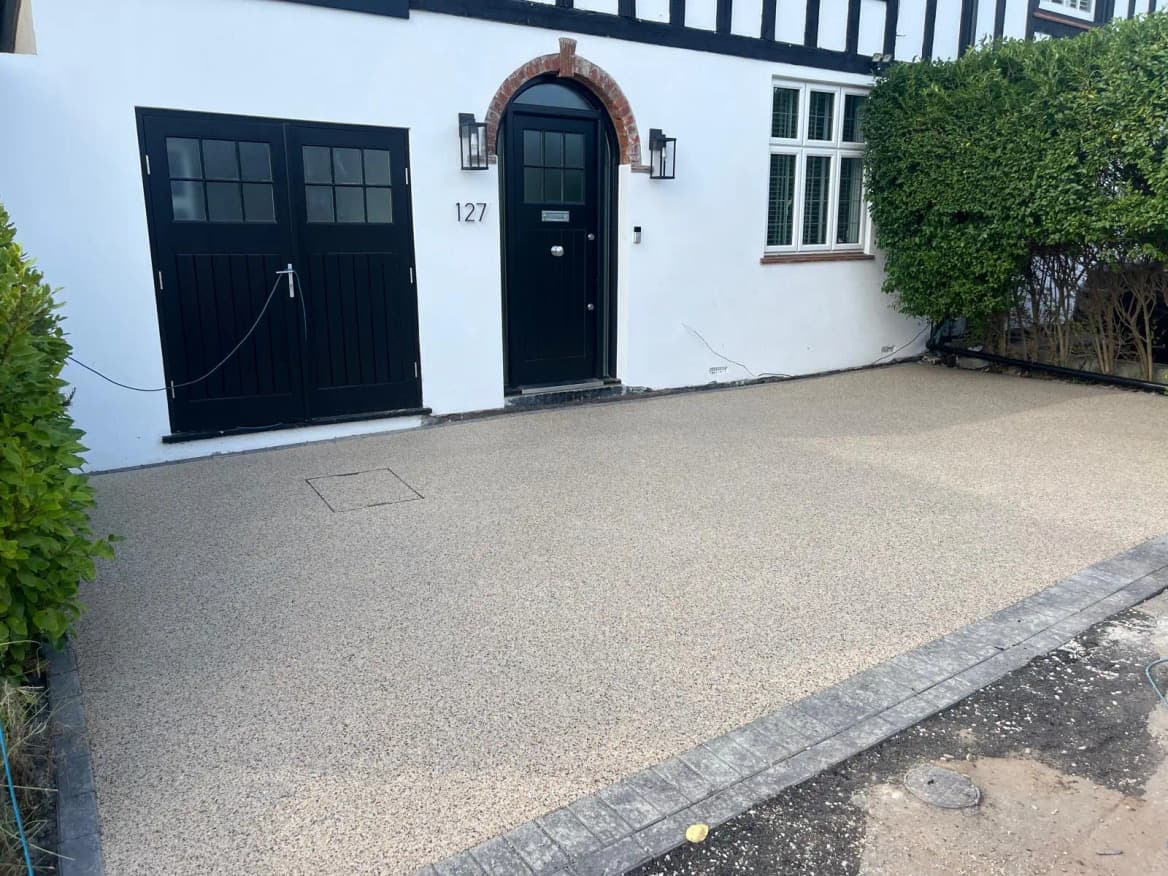
Resin Bound Driveways
Seamless, permeable and sharp-looking for years. Mixed on site and trowelled by hand — and only ever laid on a base that's genuinely up to the job.
Get a resin quote- Most requested
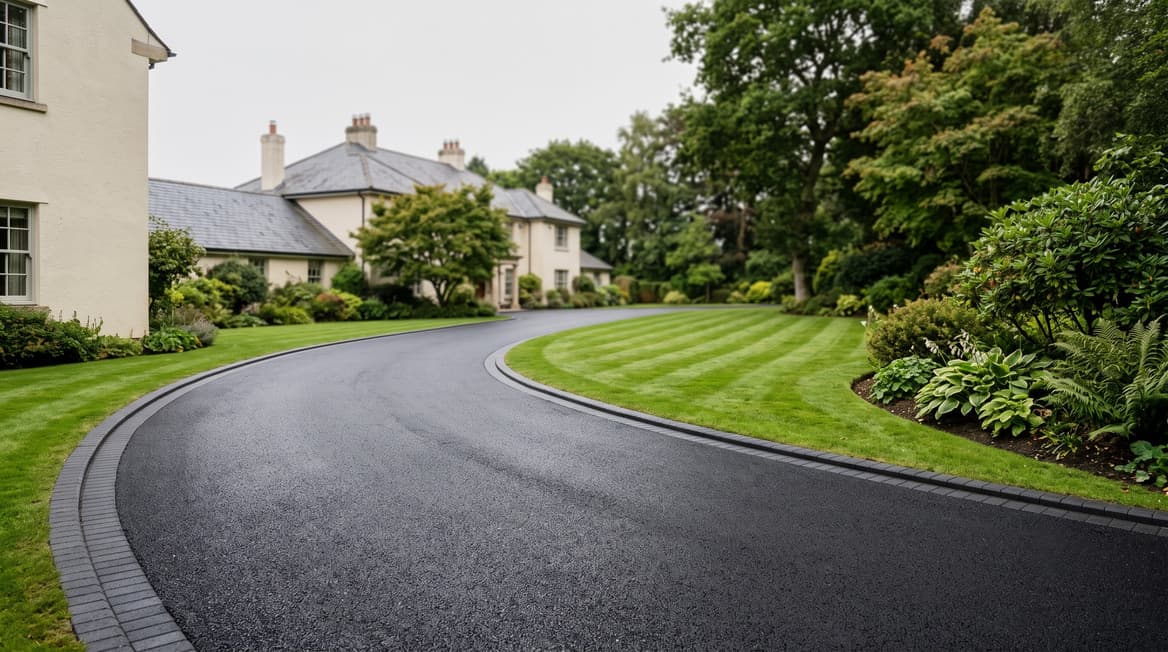
Tarmac Driveways
The workhorse driveway — quick to lay, well priced and tough. Hot-laid and properly compacted so it stays flat under cars and vans, not just for the first summer.
Get a driveway quote 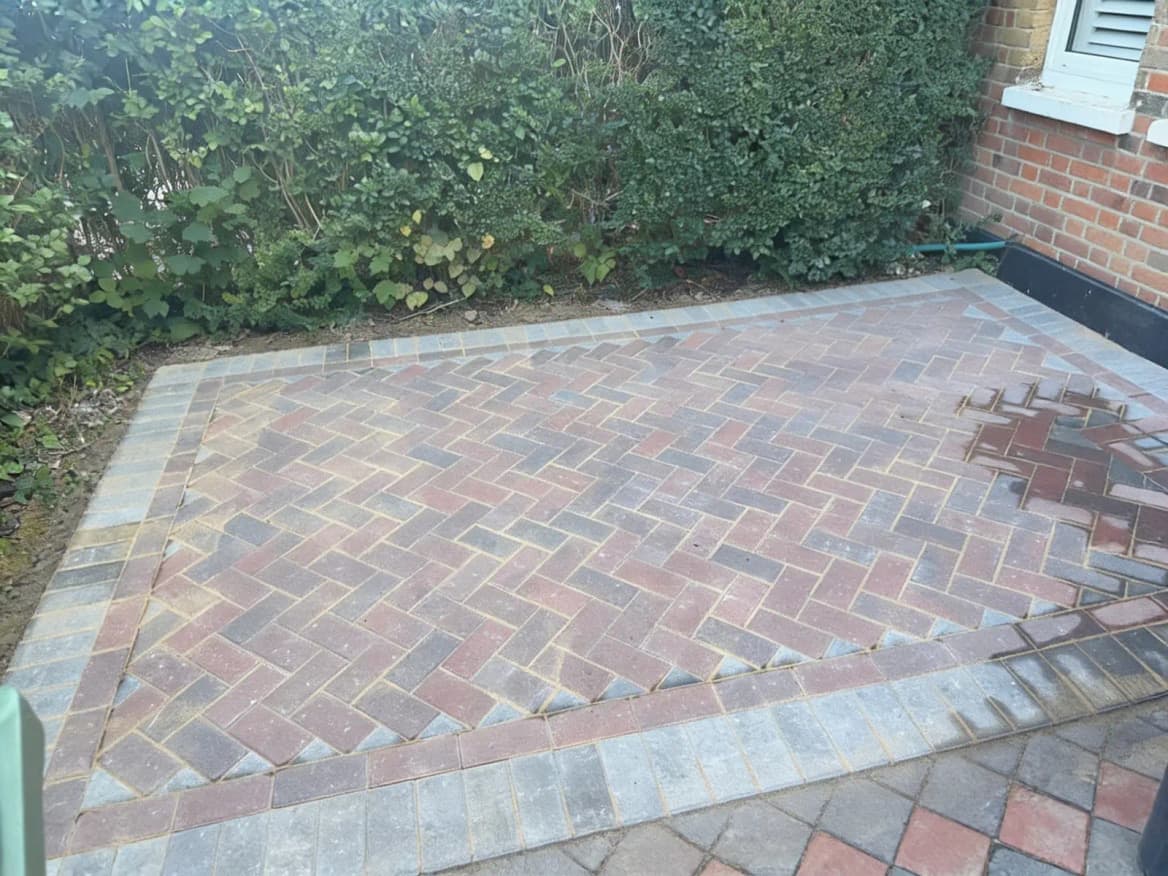
Patios & Pathways
Porcelain, sandstone or block, laid with the right falls and jointed properly — so water runs off the way it should and the edges don't lift a season later.
Get a patio quote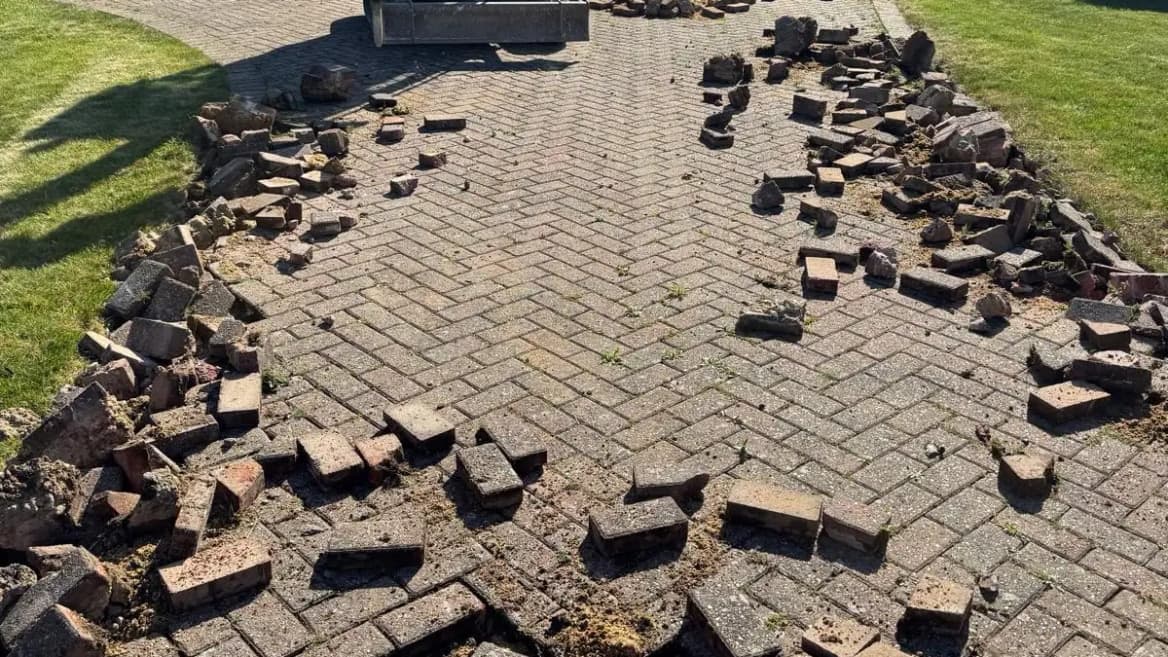
Driveway Repairs
Dipping, cracked or growing weeds? A drive that's tired in places can usually be put right — patched, re-jointed or re-laid in sections — without ripping the whole thing up.
Book a repair
Need a price for a driveway or surfacing project?
Free, no-obligation quotes. No project too small or too big.