Commercial service
Line Marking & Bay Markings
Bays, accessible spaces, hatching, arrows and speed reminders — in thermoplastic or paint, set out properly on new and existing car parks.
About Line Marking & Bay Markings
Line marking is what turns a slab of tarmac into a car park that works. Bays sized so people can actually open their doors, accessible spaces where they should be, hatching and arrows that make the traffic flow obvious — get the layout right and a car park runs itself; get it wrong and you get kerbed cars, blocked routes and complaints.
We mark out new and existing car parks, yards, schools, and private and industrial sites, in thermoplastic or paint depending on the surface, the traffic and how long it needs to last. Thermoplastic is the hard-wearing choice for anything busy — it's bonded into the surface and lasts for years; paint is quicker and cheaper for lighter use or a quick refresh. We'll tell you which fits your site rather than defaulting to one.
It's not just paint on the ground, either. A good layout comes from working out the circulation first — where cars enter, how they flow, where they queue, which bays get used and which get ignored — then setting out bays, accessible spaces, parent-and-child spaces, loading areas, hatching and directional markings to match. Done as part of a resurfacing job or on its own, the aim is the same: a car park that's clear, safe and gets the most out of the space.
Best for
- New car parks needing a first layout set out properly
- Tired car parks where faded markings are costing usable spaces
- Schools, retail, office and industrial sites needing clear, safe circulation
What’s included
- A site visit to work out circulation and the best use of the space
- A marked-out layout — bays, accessible spaces, hatching, arrows
- Thermoplastic or paint chosen for the surface and the traffic
- Accessible and parent-and-child bays to the right dimensions
- Directional arrows, give-way lines and speed reminders
- Loading bays, no-parking hatching and pedestrian routes
- A clean, accurate set-out that maximises usable spaces
How the job runs
- Site visitWe look at how traffic enters, flows and parks, and work out the layout that gets the most usable, safe bays out of the space — rather than just re-marking whatever was there before.
- Set outThe layout is set out and marked on the ground for you to check before anything is laid down permanently, so bay sizes, accessible spaces and routes are agreed first.
- MarkBays, hatching, arrows and symbols are applied in thermoplastic or paint to the agreed layout, with clean edges and accurate dimensions — accessible bays to the correct size, not squeezed.
- Check and hand overWe walk the finished car park with you, confirm the markings are as agreed, and let you know when it's ready for traffic — quickly for paint, once cooled for thermoplastic.
Materials & spec
What we build with
- Thermoplastic — Hot-applied, bonded into the surface — the hard-wearing choice for busy car parks and roads, lasting years
- Paint — Fast-drying road-marking paint — quicker and cheaper for lighter use or a straightforward refresh
- Set-out — Bays, accessible spaces and routes measured and set out to the correct dimensions before any marking goes down
- Symbols & markings — Accessible symbols, arrows, give-way lines, speed reminders and hatching applied to standard
- Surface prep — The surface swept and dried so the markings bond properly rather than lifting
Things worth knowing
Thermoplastic or paint
The choice comes down to traffic and lifespan. Thermoplastic is melted and bonded into the surface — it's thick, hard-wearing and reflective, and on a busy car park or road it lasts for years, which makes it the cheaper option over time despite the higher upfront cost. It's what we'd recommend for anything with real footfall or vehicle movement.
Paint is quicker to apply and cheaper on the day, and it's the sensible choice for lighter-use sites, temporary layouts, or a quick refresh of markings that are basically fine but fading. For a site that's about to be resurfaced anyway, paint can bridge the gap until the permanent thermoplastic goes on the new surface. We'll recommend whichever genuinely suits your traffic and how long you need it to last.
FAQ
Line Marking — common questions
Can you re-mark a faded car park without resurfacing it?
Yes — if the surface itself is sound, re-marking is a standalone job. Faded, worn-out markings cost you usable bays and make a car park feel neglected, and fresh thermoplastic or paint transforms it for a fraction of resurfacing cost. We'll flag it if the surface is actually the problem rather than just the lines.
Do you set out accessible bays correctly?
Yes. Accessible bays are marked to the correct dimensions with the proper access zones and symbols — not squeezed to fit an extra space in. Getting them right matters both for the people who use them and for the site's obligations, so we set them out properly as standard.
How long before the car park can be used?
Paint dries quickly — usually a matter of an hour or two before traffic can run over it. Thermoplastic is trafficable as soon as it's cooled, which is fast. We'll give you exact times on the day, and where a car park is busy we can phase the marking to keep parts of it open.
Can you improve the layout, not just repaint it?
That's the better job, and usually what we'd suggest. Rather than copy a layout that never worked, we look at how traffic actually flows and set out bays, routes and hatching to get more usable, safer spaces from the same tarmac. A better layout often finds bays the old one wasted.
Do you mark schools, industrial and private sites too?
Yes — schools, warehouses, yards, depots and private estates as well as retail and office car parks. Wherever vehicles and pedestrians share space, clear markings for bays, routes, loading areas and pedestrian crossings make it safer and more orderly, and we set them out to suit the site's particular traffic.
More from us
Other services
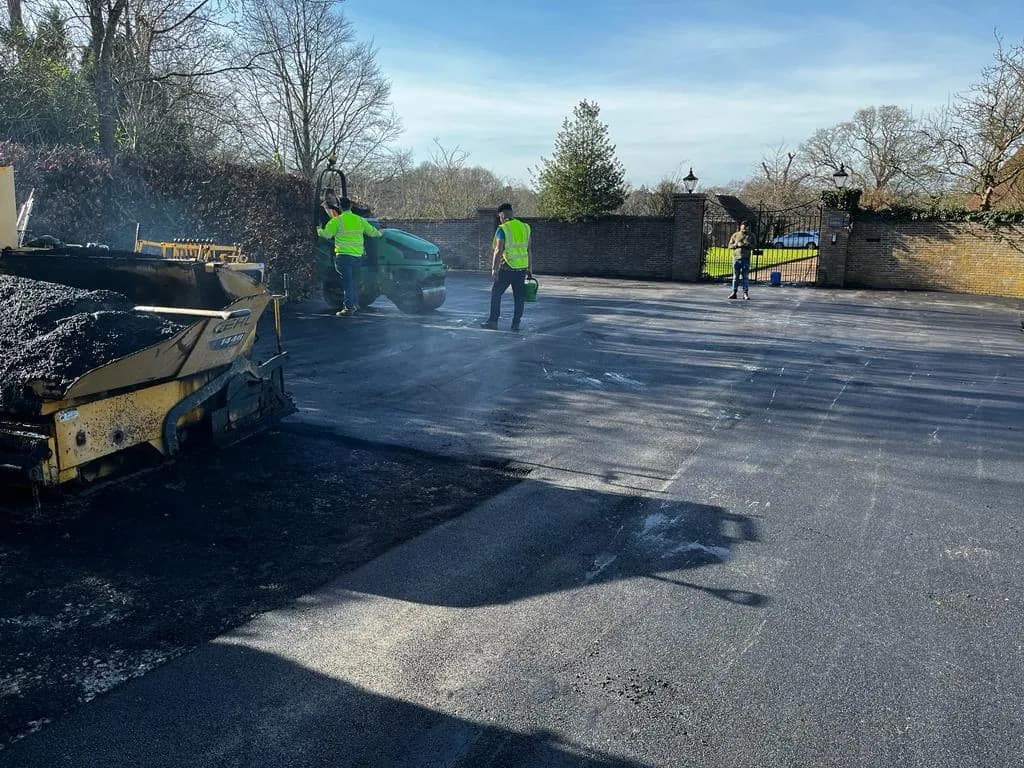
Car Park Surfacing
New builds and resurfacing for retail, office and residential sites — with drainage and line marking sorted at the same time, and the work phased so you keep trading.
Request a site visit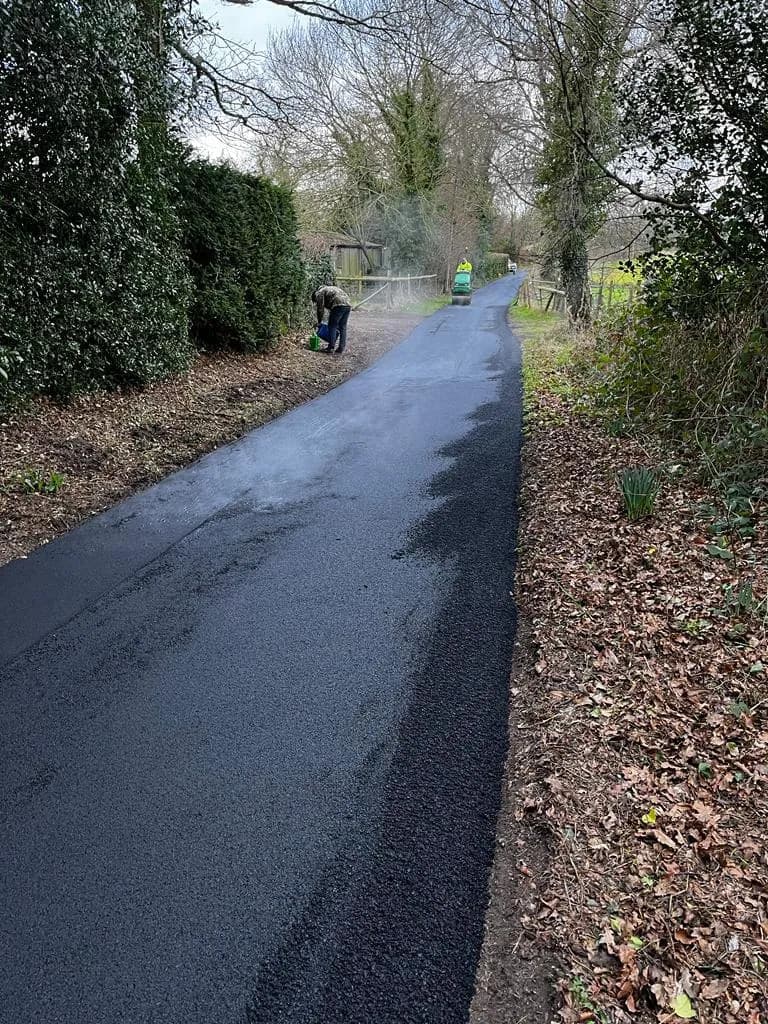
Road Surfacing
Estate roads, private lanes and unadopted roads — full-depth build or overlay, planed, laid and rolled to the spec the traffic actually calls for.
Discuss your project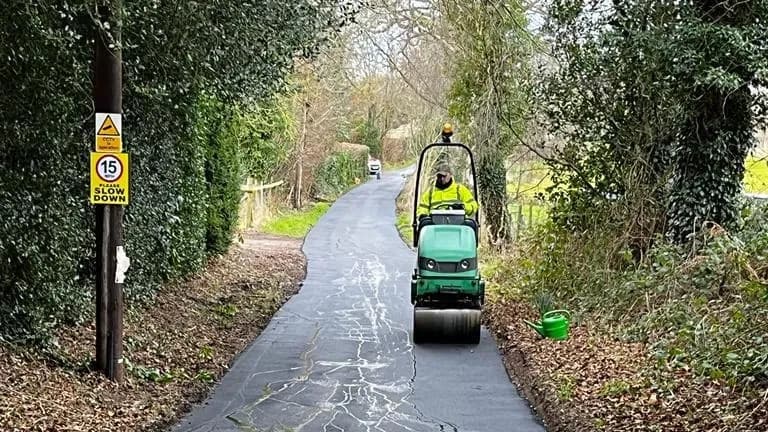
Private Roads & Estate Surfacing
For residents' associations, schools, hotels and country houses — surfacing phased around the people who use it, so access stays open while the work gets done.
Talk to us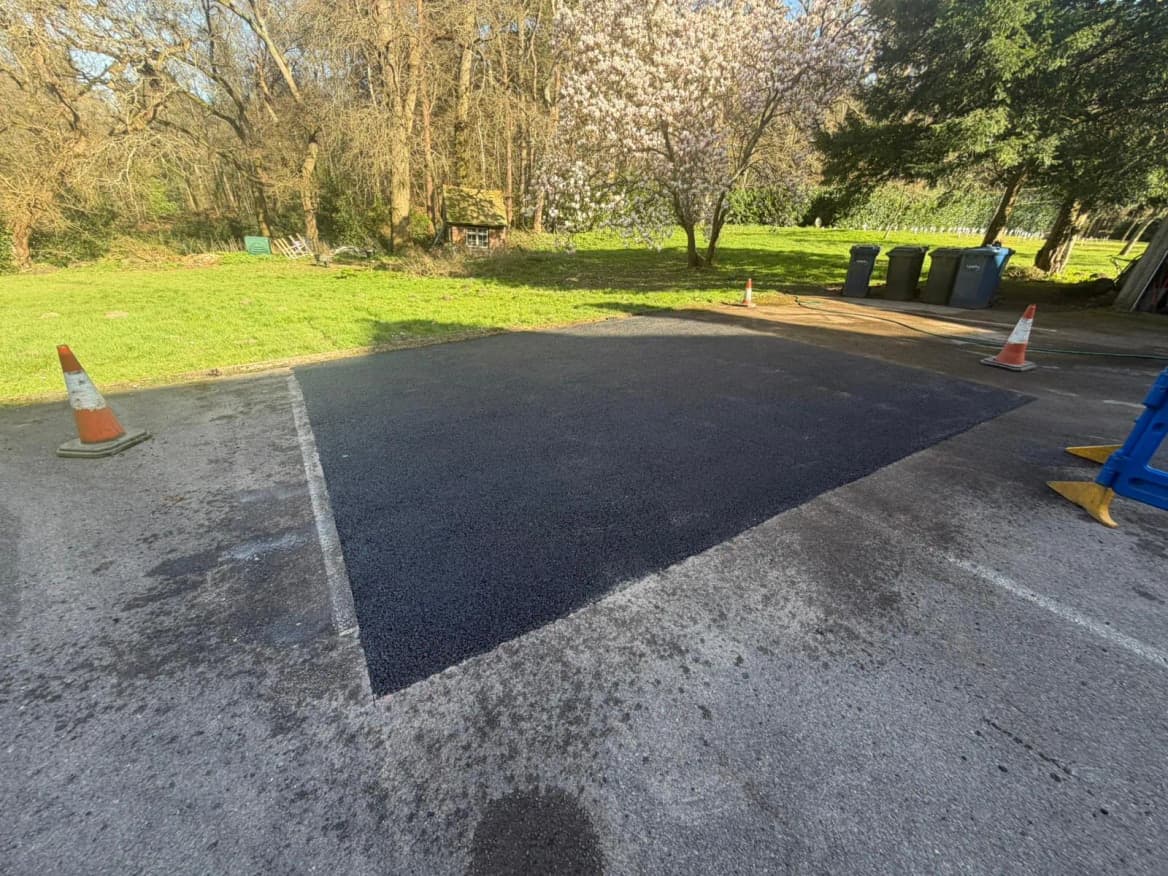
Pothole Repairs
One-off jobs or scheduled rounds for property managers, estates and councils. Cut out square, cleaned, primed, filled and compacted — a repair that lasts past the winter.
Book a repair
Need a price for a driveway or surfacing project?
Free, no-obligation quotes. No project too small or too big.