

Residential service
Tarmac Driveways
The workhorse driveway — quick to lay, well priced and tough. Hot-laid and properly compacted so it stays flat under cars and vans, not just for the first summer.
About Tarmac Driveways
Tarmac is the surface most people picture when they think of a driveway, and for good reason: laid properly it takes everything a British year throws at it — frost, downpours, the daily weight of the car — and still looks even a decade on. It's also the best value per square metre we lay, which is why it's the go-to for longer drives and anything that sees a van.
The catch is in those two words, 'laid properly'. Tarmac's name for cracking and crumbling comes almost entirely from shortcuts underneath it — a thin skim over the old surface, a sub-base that was never compacted, edges pinched in as an afterthought. None of that shows on the day; all of it shows by the second winter. So we build from the ground up: dig to the depth the ground needs, compact the sub-base in layers, restrain every edge before a drop of tarmac goes down.
We lay hot, straight from the plant, so the material goes down inside its working window and rolls to a tight, dense finish. We don't use cold-lay bagged tarmac on driveways — it's a repair material, and it never compacts to the same strength. The result is a drive that's ready for the car the same evening and still flat long after the cheap version would have needed doing again.
Best for
- Longer or larger drives, where tarmac's lower cost per square metre counts most
- Homes that see heavier use — regular vans, trailers or shared access — where tarmac shrugs off tracking
- Anyone who wants a proven surface that can be patched or overlaid later rather than dug up whole
What’s included
- A site visit and a clear written quote before anything starts
- Excavation of the old surface and cart-away of the spoil
- A compacted Type 1 sub-base, depth set by the ground and the load
- Edge restraints — kerb, block or a haunched concrete edge — set first
- Binder and surface courses hot-laid at the right depth and rolled
- Falls and drainage designed so water runs away from the house
- The site swept and left clean, with a walk-round at the end
How the job runs
- Survey and quoteWe walk the job, check the ground and how you use the drive, then put a fixed price in writing. No obligation and no pressure to decide on the spot.
- ExcavateThe old surface comes up and we dig to the depth the sub-base needs — usually 150–200mm for cars, more on soft ground or where vans park. Spoil is carted away rather than buried on site.
- Base and edgesA Type 1 sub-base goes in and is compacted in layers, and the edge restraints are set and haunched. This is the part nobody sees and the part that decides how long the drive lasts.
- Binder courseThe structural layer — hot binder-course macadam, raked out and rolled while it's still up to temperature. It carries the load and gives the surface course something solid to bond to.
- Surface and rollA close-graded surface course goes over the binder and is rolled in overlapping passes until it's dense and even. The drive cools over a few hours and is usually ready for the car the same day.
Materials & spec
What we build with
- Sub-base — 150–200mm of compacted Type 1 MOT stone, laid in layers — the foundation that decides how flat the drive stays
- Binder course — Hot-laid dense macadam, the load-bearing layer that makes a driveway rather than a surface dressing
- Surface course — Close-graded macadam in standard black or a red/buff blend — the wearing layer the eye sees and tyres touch
- Edge restraint — Haunched kerb, block soldier course or bull-nosed edging, set before laying — never pinched in afterwards
- Geotextile membrane — Laid over soft or clay ground before the stone, so the fines don't pump up and soften the base over time
Things worth knowing
What separates a ten-year drive from a two-year one
The ways tarmac fails are predictable, and they all trace back to the same corners cut. Crumbling edges mean the edging was skipped or laid after the tarmac instead of before it. Ruts where the car sits mean the surface was too thin or wasn't rolled hot. Cracks across the middle mean a sub-base that flexes under load. None of it shows on handover day — which is exactly why it's so easy to sell a drive that won't last.
Worth getting in writing before any money changes hands: the total depth of tarmac in millimetres, the sub-base depth and material, whether the surface is rolled or just tamped with a plate, and how the edges are finished. A contractor who won't put those in a quote usually has a reason.
Drainage and the SuDS rules
Standard tarmac isn't permeable — water runs off it rather than through it. For a new or replacement drive over five square metres, the rules say you have to deal with that runoff on your own land: a soakaway, a channel to a border, or a fall to a permeable strip along the edge. We design that in at quote stage, because retrofitting drainage later means digging the job back up.
Where genuine permeability is needed, porous tarmac is an option — but it needs the right open-graded base to drain into and a different maintenance routine, so we'll tell you honestly whether it's the right call for your site or whether standard tarmac with proper drainage is simpler and tougher.
Where we do this
Tarmac Driveways across Surrey
We cover the whole county — these are the towns we’re asked for tarmac driveways most often.
FAQ
Tarmac Driveways — common questions
When can I park on it?
You can walk on it within a couple of hours and park the car on it the same evening in normal weather. Give it 48 hours before anything heavy — a van, a caravan, a loaded trailer — and about a week before it's fully hardened. In a hot spell, don't park in the same spot every day for the first fortnight; fresh tarmac stays soft in the heat before it fully cures.
Can you just lay over what's already there?
Sometimes — if the existing drive is still solid underneath, with no sinking, soft patches or wide cracks, and there's room at the door and garage for the extra height. If the base has gone, an overlay only hides the problem for a year or two. We'll tell you straight at the site visit which one you're actually looking at, because we'd rather quote the right job than come back and fix the wrong one.
Is coloured tarmac as hard-wearing as black?
Yes. Red or buff tarmac uses the same macadam mix with a pigment added — the structure is identical to standard black. Red is often used to mark a driveway off from a shared road, and buff or brindle blends soften the look against a brick or stone frontage. The colour fades gently over the years as the surface weathers, which is normal.
How do I look after a tarmac drive?
Very little to do. Keep the edges clear of soil and creeping plants, deal with oil spills promptly since petroleum softens bitumen, and fill any small cracks before water gets in and freezes. A surface dressing every ten to fifteen years refreshes the top and adds years without the cost of relaying.
Will it work on a sloped drive?
Yes — tarmac handles slopes well and is a common choice for ramped or stepped access. The thing that matters on a slope is drainage: the falls need setting so water is steered away from the house rather than sheeting straight down towards the road. A channel or a gutter at the foot of the slope usually does it, and we factor the gradient into the spec at quote stage.
More from us
Other services
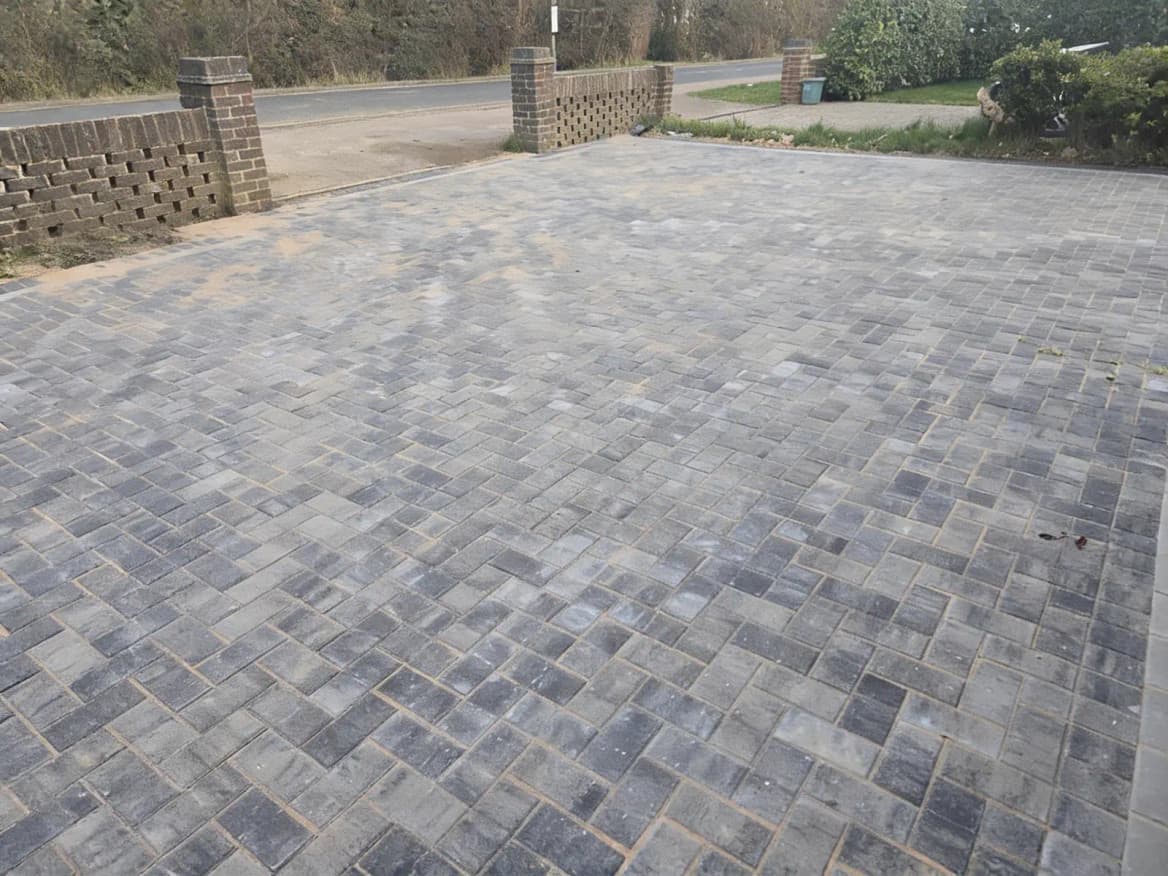
Block Paving Driveways
A smart, interlocking driveway that lifts the front of the house — laid to BS 7533 on a proper base, so it holds its shape instead of dipping and sprouting weeds.
Get a block paving quote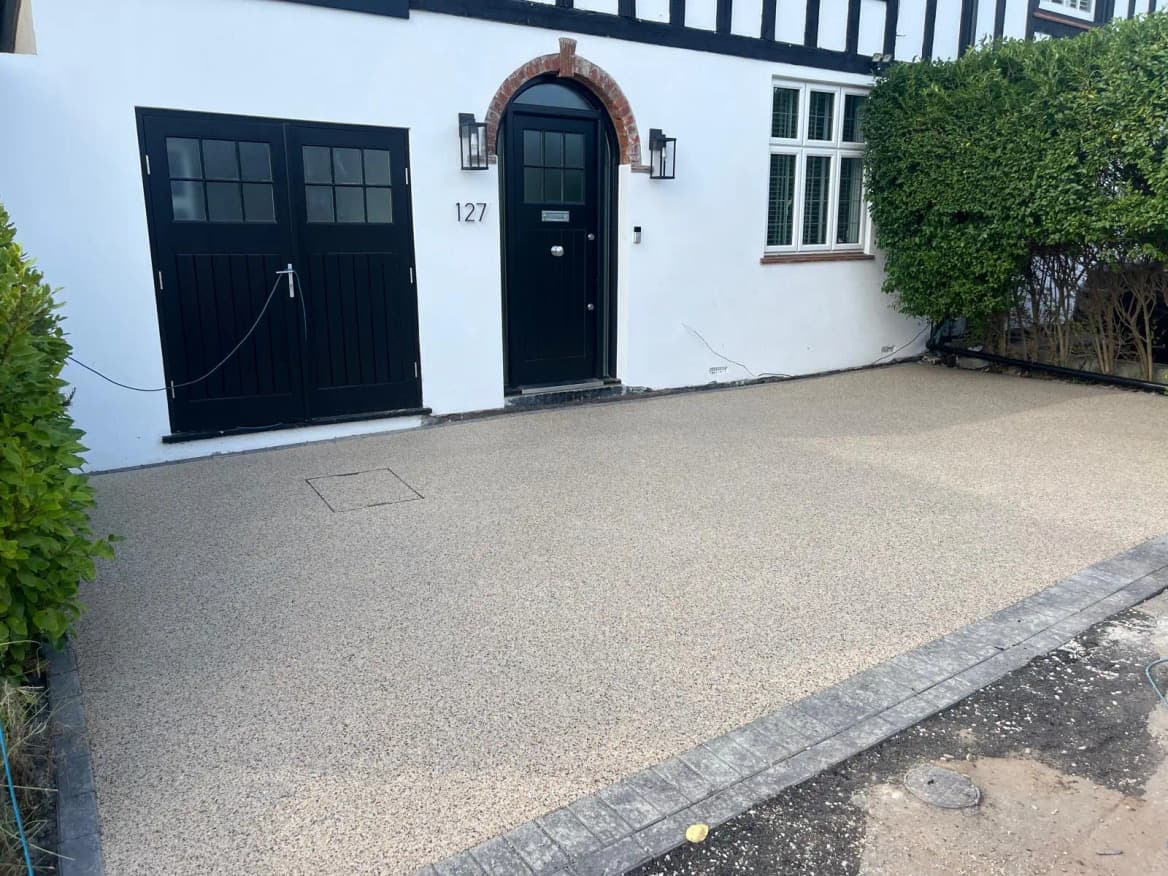
Resin Bound Driveways
Seamless, permeable and sharp-looking for years. Mixed on site and trowelled by hand — and only ever laid on a base that's genuinely up to the job.
Get a resin quote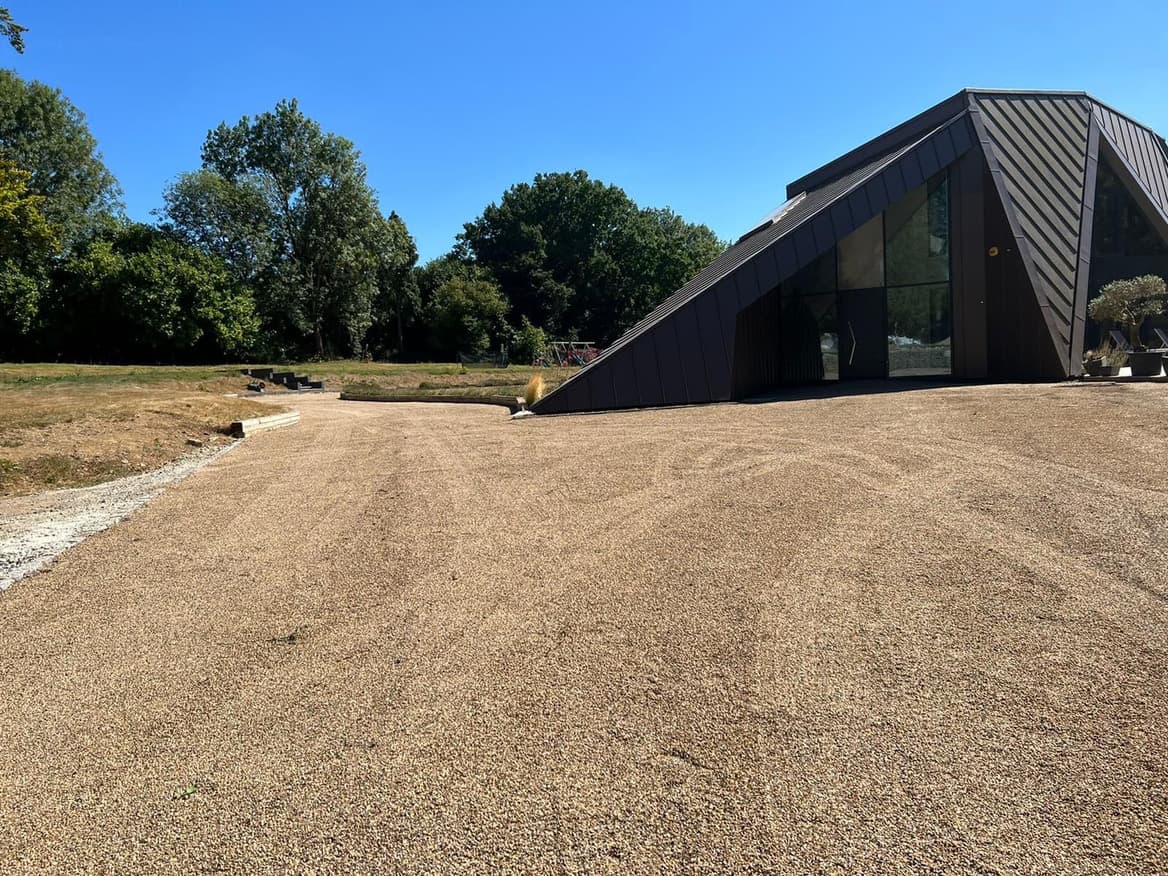
Gravel Driveways
The right fit for period and rural properties. Built on a proper base with set edges and the correct depth, so the stone stays put instead of scattering across the lawn.
Get a gravel quote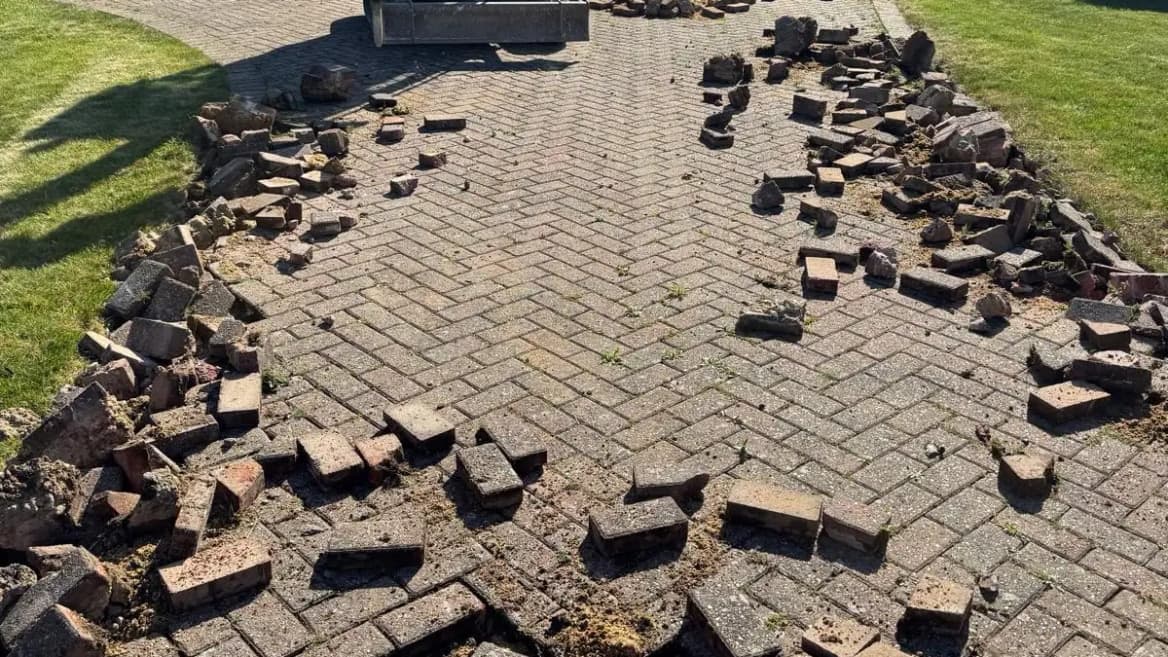
Driveway Repairs
Dipping, cracked or growing weeds? A drive that's tired in places can usually be put right — patched, re-jointed or re-laid in sections — without ripping the whole thing up.
Book a repair
Need a price for a driveway or surfacing project?
Free, no-obligation quotes. No project too small or too big.