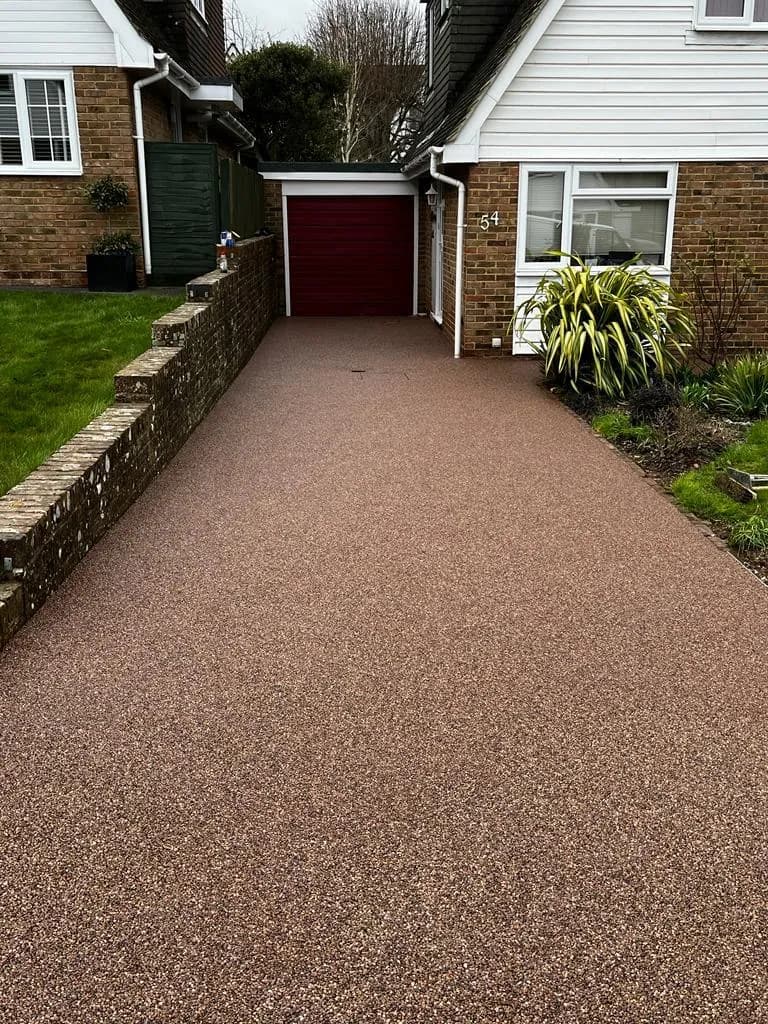

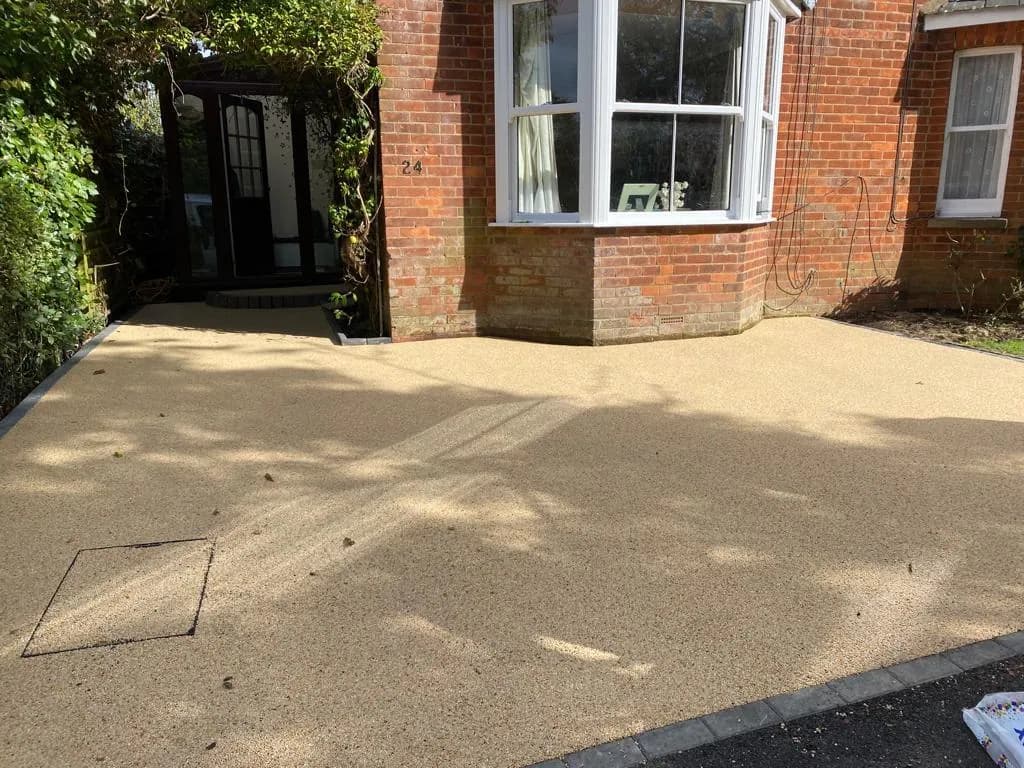
Since the planning rules changed in 2008, any new or replacement driveway over 5 square metres at the front of a house in England has to do one of two things: use a permeable surface, or drain into a soakaway on your own land. The point of it is simple — stop drives tipping their rainwater onto the road and into drains that can't take it.
In practice it decides what you can lay without needing planning permission. Resin bound on a permeable sub-base is fine straight off — water goes through the surface and into the ground. Loose gravel on a permeable base is fine too.
The surfaces that aren't permeable by nature — tarmac, concrete, standard block paving on bedding sand and a closed base — can still go down, but you have to build drainage in. Usually that's a soakaway on the property, a permeable strip along the edge, or running the water off into a planted border. Skip it and you're technically in breach, and you might need a planning application after all.
How hard is it enforced? On a normal house, almost never off the council's own back. But it can surface when a neighbour complains, when you sell and the buyer's solicitor starts asking, or when an insurer looks closely at a flood claim. We price every job to be compliant from the start — it's a lot cheaper than retrofitting a soakaway once the drive's already down.