
Permeable, porous, resin bound, resin bonded, SuDS — the words around driveway drainage sit so close together they trip nearly everyone up. Here's the plain version.
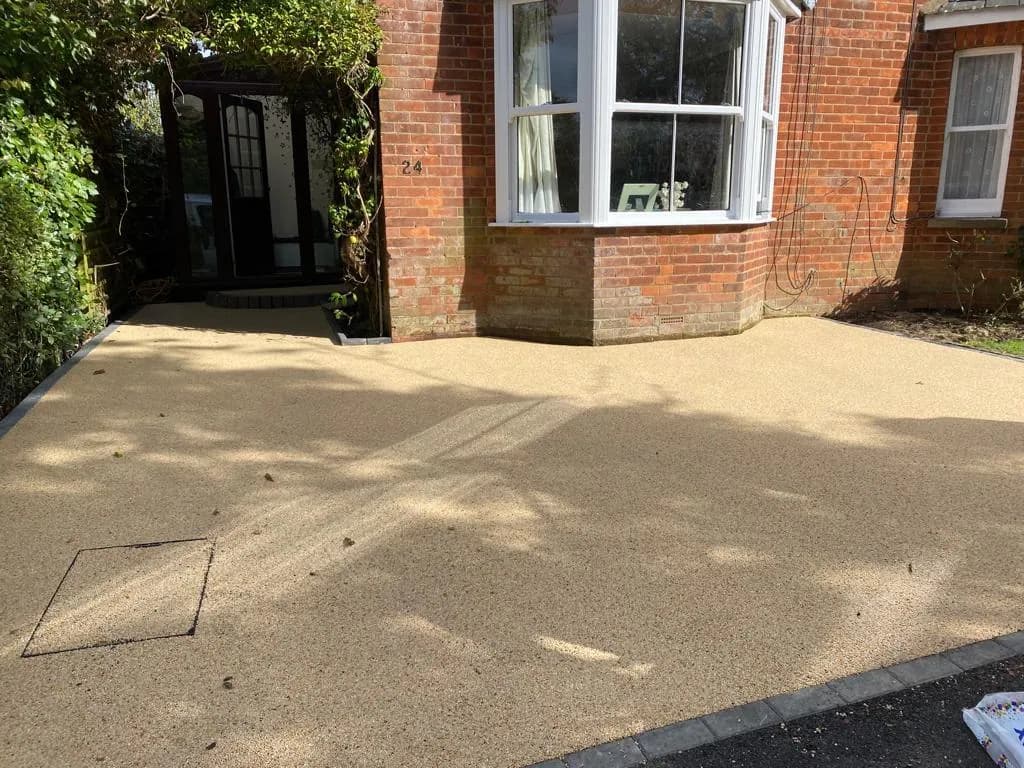
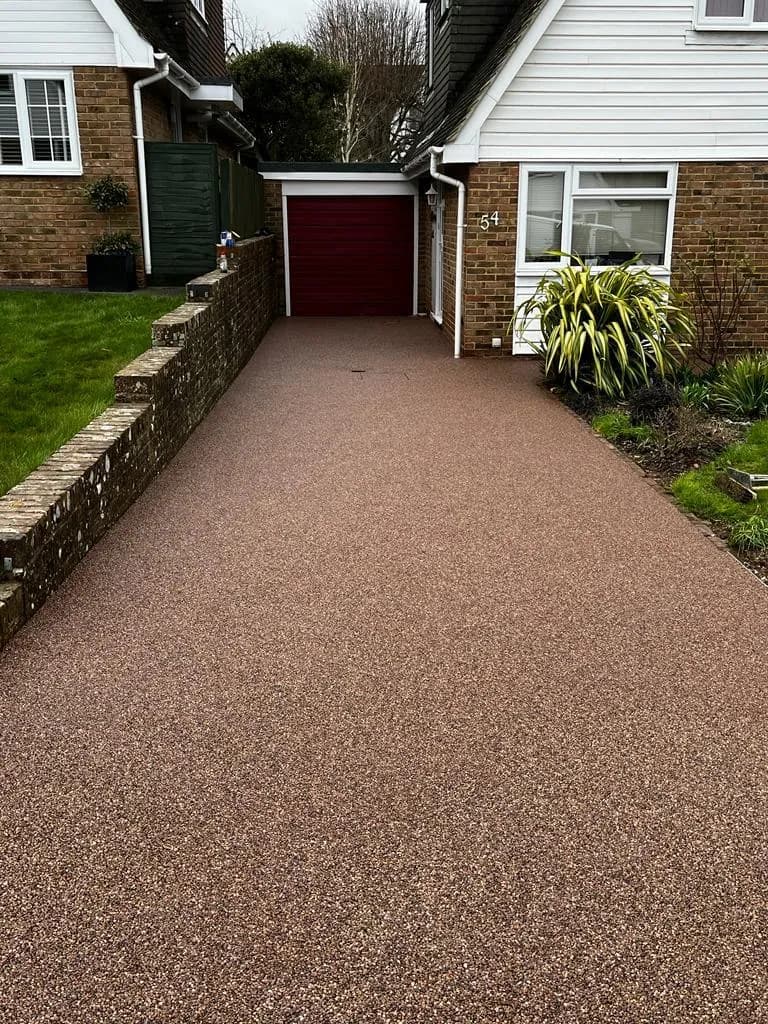
A permeable surface lets water through the surface itself, into a permeable base, and down into the ground. Resin bound — the mixed-and-trowelled finish — is permeable. Loose gravel on a permeable base is permeable. Permeable blocks with wide joints are permeable.
A non-permeable surface — tarmac, concrete, standard block paving on bedding sand — sheds water off to the side. To be compliant on a new drive it has to send that water to a soakaway or a planted area on your own land.
Bound versus bonded is the one that catches people. “Bound” is what you want — the permeable, modern resin drive. “Bonded” is a coat of resin with chippings scattered onto it: looks cheaper, isn't permeable, and wears badly. If a quote says “bonded”, check exactly what you're being sold before you sign anything.